

Good grazing and management keep worm burdens down and make any treatment work better. A worm egg count helps you treat only when your animals need it.
Treat only when needed
Worming every animal by routine speeds up wormer resistance. Testing a group before treatment shows whether a wormer is needed, and a follow-up test shows whether it worked. Young stock, ewes around lambing and animals in poor condition are the groups most worth testing.
Choosing a wormer
Wormers come in several groups, and resistance to one or more is common on sheep and goat farms. Always check the label, or ask your vet or animal medicines adviser (SQP) which product and dose suits your animals, and observe meat and milk withdrawal times. Dose by weight, and do not under-dose.
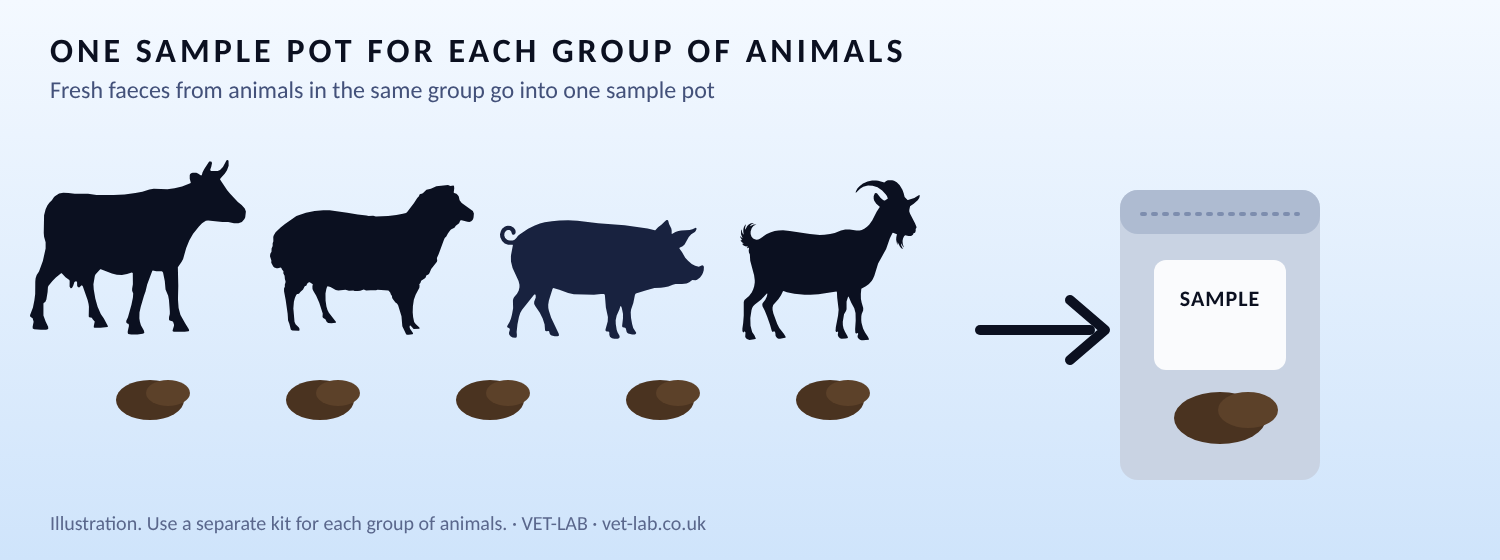
How to take a sample
- Collect fresh faeces, ideally from that morning, from the ground or when an animal passes them
- Sample several animals from the same group and mix them into one pot
- Use a separate kit for each group of different age or grazing
- Use the spoon and gloves in the kit, seal the pot and post it Monday to Wednesday
Reducing the worm burden
- Rotate grazing and avoid putting young animals on pasture heavily grazed by the same species
- Rest or graze fields with a different species, such as cattle after sheep
- Keep new and bought-in animals separate, and treat and test them before turning out
- Avoid overstocking, and drain wet areas that hold snails and larvae
- Keep records of treatments and counts
- Avoid poaching and feeding on the ground
Ready to test?
Collect fresh faeces at home, post them free to our laboratory (Monday to Wednesday) and your result appears in your account within 24 to 48 hours of the lab receiving your sample.
Order a livestock test kitMore livestock guides
This page is general information, not veterinary advice. If your animals are unwell, or you are unsure what to do, speak to your vet.