
Good management keeps worm burdens down and makes any treatment work better. A worm egg count helps you treat only when your flock needs it.
When to worm
Worming by routine is not always necessary. Testing the flock a few times a year, and especially in spring and autumn, shows you whether treatment is needed. Birds that are thin, have dull feathers, lay poorly or have diarrhoea are worth testing.
Choosing a wormer
Only a small number of wormers are licensed for poultry, and some are available only through your vet or a registered animal medicines adviser. Always check the label or ask your vet about the right product and dose, and about egg and meat withdrawal times, which differ between products. If you sell or give away eggs, this matters.
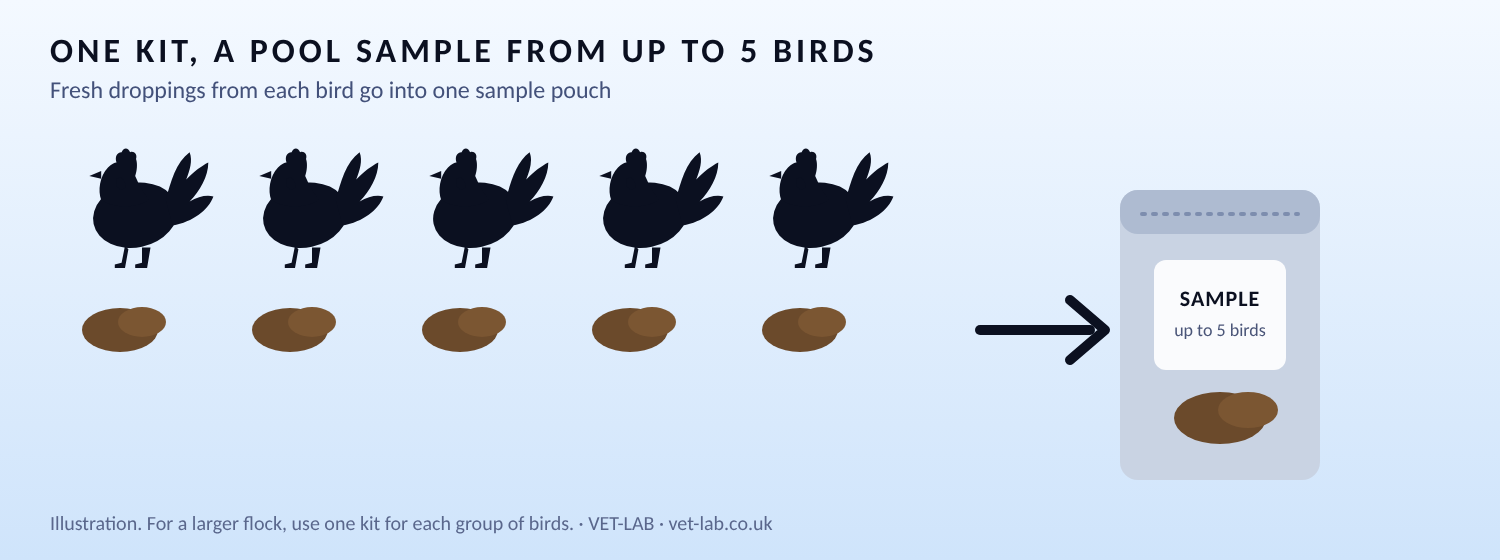
How to take a sample
- Collect fresh droppings, ideally from that morning
- Take droppings from up to 5 birds in one pool sample, and use a separate kit for each further group of birds
- Choose normal firm droppings, not the dark, sticky, strong-smelling caecal droppings
- Use the spoon and gloves in the kit, seal the pouch and post it Monday to Wednesday
Reducing the worm burden
- Rotate or rest ground where you can, as worm eggs build up on bare, heavily used patches
- Keep feeders and drinkers off the ground and clean them often
- Remove droppings regularly from houses and runs
- Avoid overstocking and keep damp areas drained
- Keep wild birds away from feed and water
- Quarantine new birds and test them before they join the flock
Ready to test?
Collect fresh droppings from up to 5 birds at home, post them free to our laboratory (Monday to Wednesday) and your result appears in your account within 24 to 48 hours of the lab receiving your sample.
Order an avian test kitMore poultry guides
This page is general information, not veterinary advice. If your birds are unwell, or you are unsure what to do, speak to your vet.