
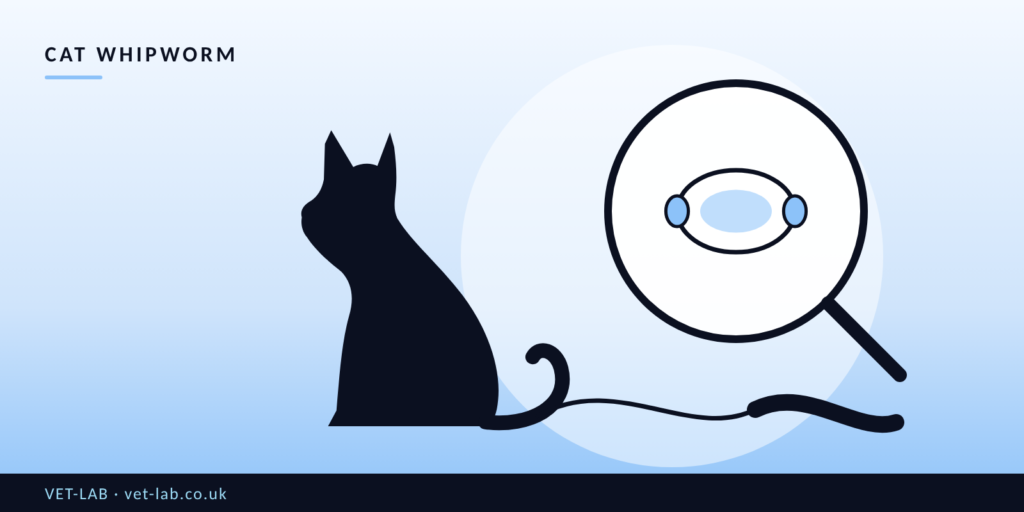
Whipworms are thin worms that live in the large intestine, with a narrow front end that looks like the lash of a whip. They are well known in dogs, but they are rare in cats and uncommon in the UK, so they are far less of a concern than roundworm or tapeworm.
How do cats get whipworm?
- By swallowing eggs from contaminated soil or faeces
- The eggs are very hardy and can survive in soil for a long time
- Cats are not usually infected from their mother
What are the signs of whipworm?
Most infected cats show no signs. A heavy infection can cause diarrhoea, sometimes with mucus or blood, and weight loss. These signs have many other causes, so if your cat is unwell, contact your vet.
Testing for whipworm
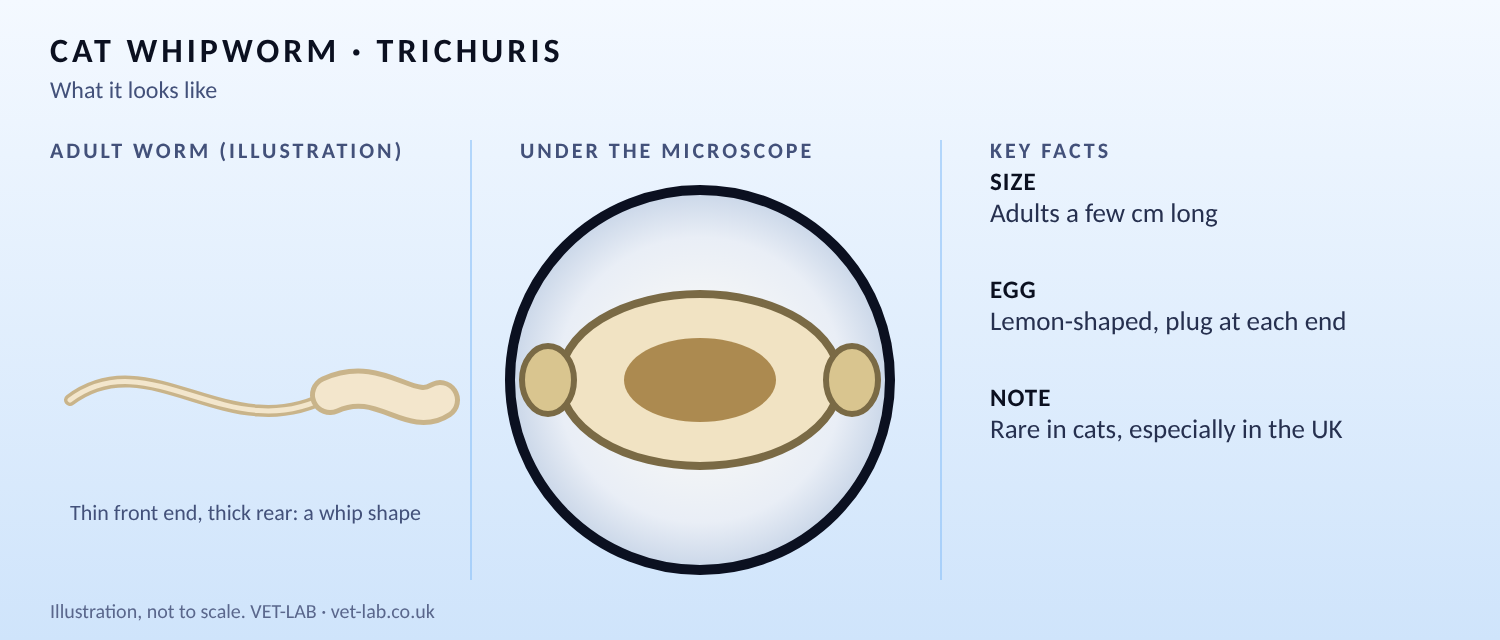
Whipworm eggs are lemon-shaped with a plug at each end, which makes them easy to recognise under the microscope. If they are present in your sample they can be seen on a faecal worm egg count. Whipworms shed eggs intermittently, so a clear sample does not completely rule them out. Read our results guide to see how to interpret your report.
Ready to test?
Collect a sample at home, post it free to our laboratory (Monday to Wednesday) and your result appears in your account within 24 to 48 hours of the lab receiving your sample.
Order a cat test kitMore cat guides
This page is general information, not veterinary advice. If your cat is unwell, or you are unsure what to do, speak to your vet.