
Feline lungworm (Aelurostrongylus abstrusus) lives in the small airways of the lungs. It is not an intestinal worm, so it is not picked up by the standard worm count and needs its own test.
How do cats get lungworm?
Cats catch lungworm by eating infected prey. Slugs and snails carry the larvae, and so can the small animals that eat them, such as mice, birds and frogs. Cats that hunt are at the highest risk.
What are the signs of lungworm?
- Coughing or wheezing
- Fast or laboured breathing
- Weight loss and lethargy
- Nasal discharge
Many cats show only mild signs or none at all, but lungworm can cause serious illness, particularly in kittens and young cats. If your cat has a persistent cough or breathing difficulty, contact your vet promptly.
How is lungworm tested?
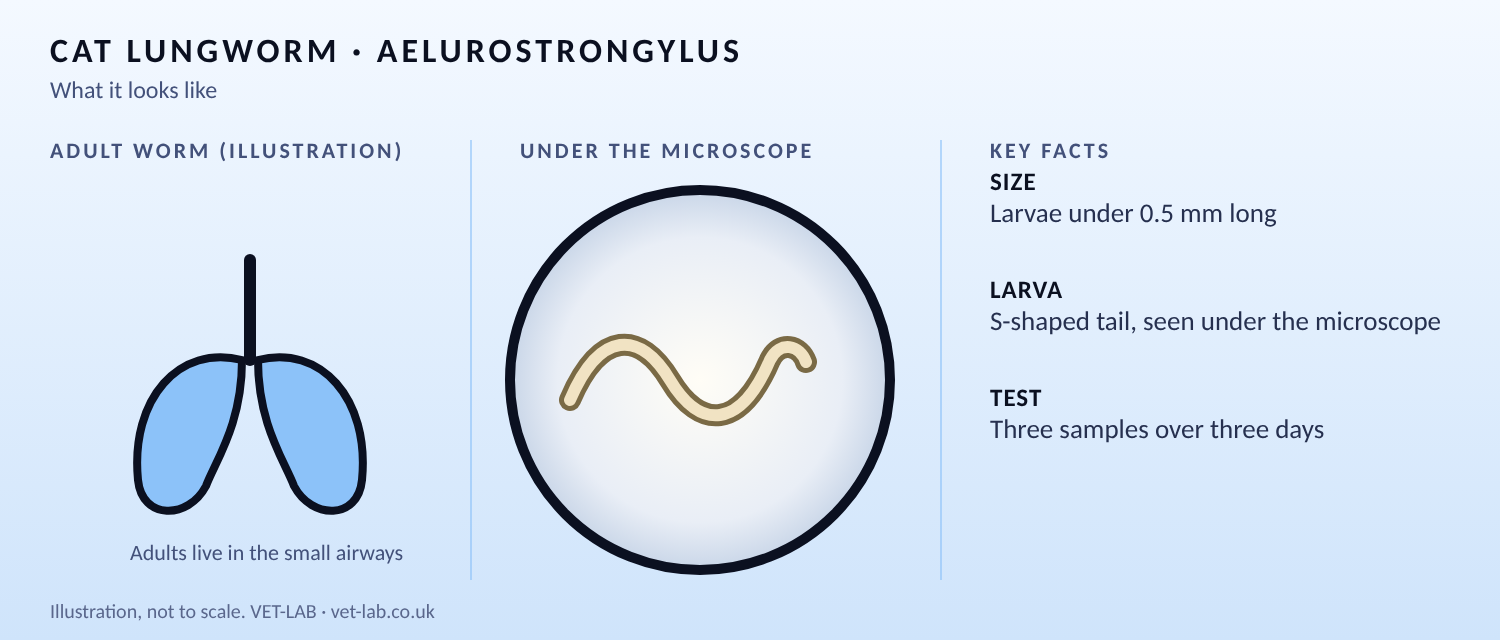
Lungworm larvae are too small to see, and cats pass them intermittently. For that reason our lungworm test uses samples collected over three days, which gives a more reliable result than a single sample. Post all three together on day three, Monday to Wednesday. Results are emailed within 5 days of the lab receiving your samples.
You may also like our results guide and worming your cat.
Ready to test?
Collect a sample at home, post it free to our laboratory (Monday to Wednesday) and your result appears in your account within 24 to 48 hours of the lab receiving your sample.
Order a cat test kitMore cat guides
This page is general information, not veterinary advice. If your cat is unwell, or you are unsure what to do, speak to your vet.