
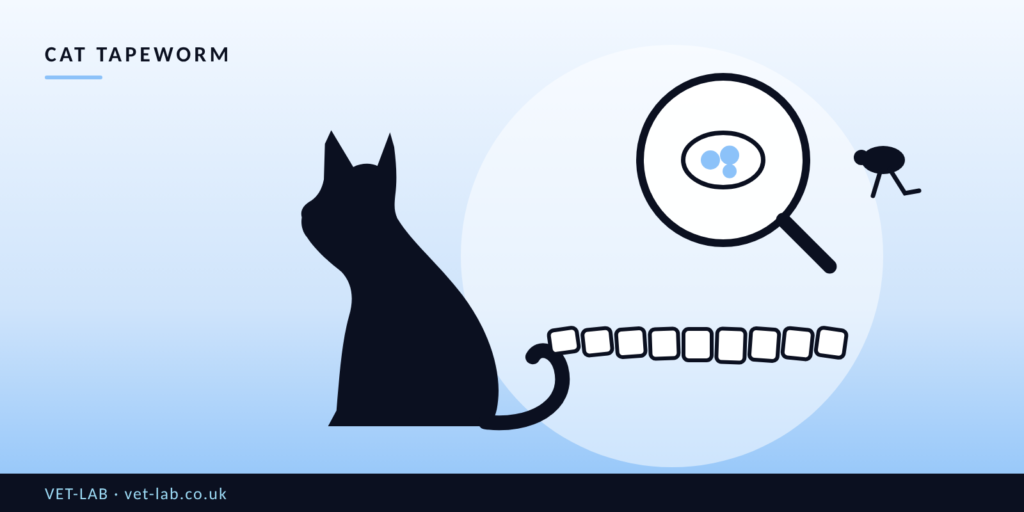
Tapeworms are long, flat, segmented worms that live in the gut. Cats are mainly affected by two types: Dipylidium caninum, spread by fleas, and Taenia taeniaeformis, spread by rodents.
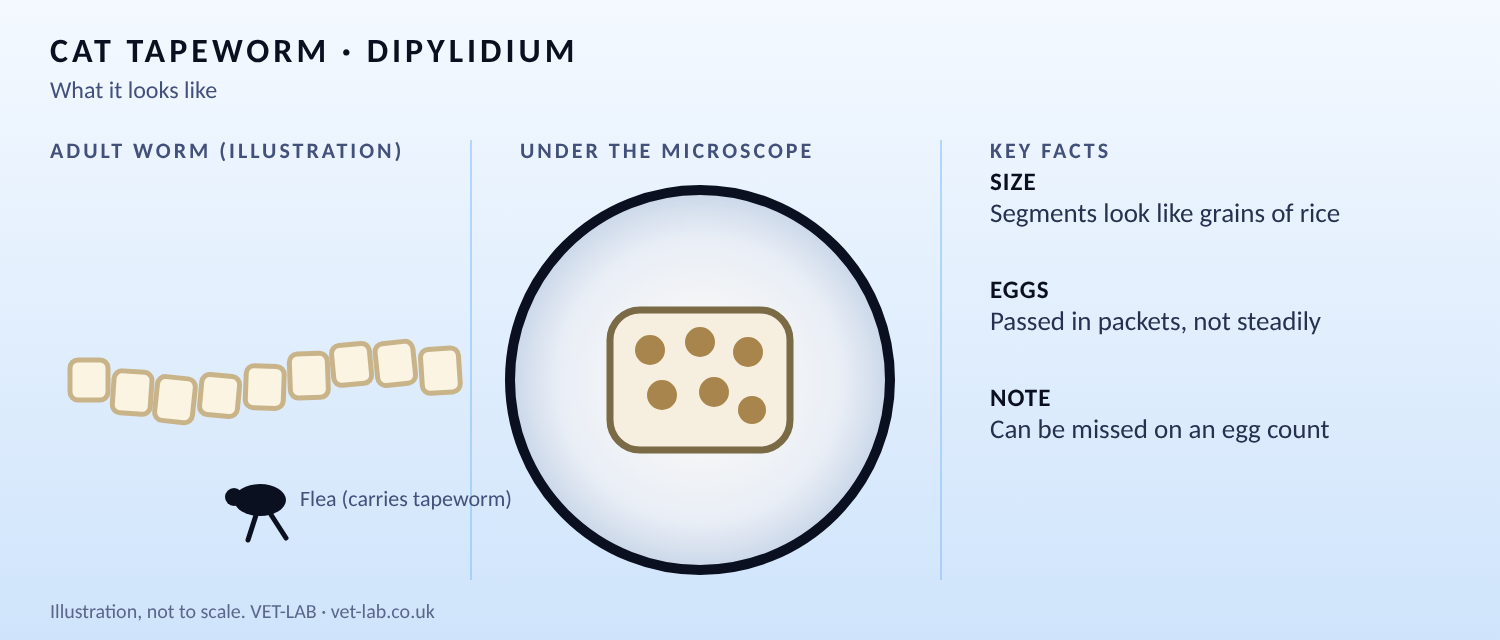
How do cats get tapeworm?
- Fleas. Flea larvae eat tapeworm eggs. A cat that swallows an infected flea while grooming can become infected.
- Hunting. Cats that catch and eat mice, rats or other small animals can pick up Taenia tapeworm.
What are the signs of tapeworm?
- Small, rice-like segments around the bottom, in faeces or on bedding
- Licking or scooting the bottom along the floor
- Weight loss despite a good appetite
Many cats with tapeworm show no signs at all.
Tapeworm and worm egg counts
Tapeworms release their eggs in segments rather than steadily, so tapeworm is very intermittent and does not always show on a worm egg count. A sample may be clear simply because no segments were passed when it was taken. If your cat has fleas or hunts, regular testing, together with good flea control, gives the best picture. Speak to your vet about a suitable treatment programme.
See our results guide and cat care and parasite prevention for more.
Ready to test?
Collect a sample at home, post it free to our laboratory (Monday to Wednesday) and your result appears in your account within 24 to 48 hours of the lab receiving your sample.
Order a cat test kitMore cat guides
This page is general information, not veterinary advice. If your cat is unwell, or you are unsure what to do, speak to your vet.