
Hookworms are small, thin worms that attach to the lining of the gut and feed on blood. They are less common in UK cats than roundworm, but they can cause problems, particularly in kittens and cats in damp, crowded or poorly kept conditions.
How do cats get hookworm?
- By swallowing larvae from contaminated soil or faeces
- Larvae can also burrow through the skin, for example through the paws
- Kittens can pick up larvae from their mother
- By eating infected prey
What are the signs of hookworm?
- Pale gums, which can mean anaemia
- Weight loss and poor growth
- Diarrhoea, sometimes dark or tarry
- Weakness or lethargy
Severe hookworm infection can be serious in kittens. If you see any of these signs, contact your vet.
Testing for hookworm
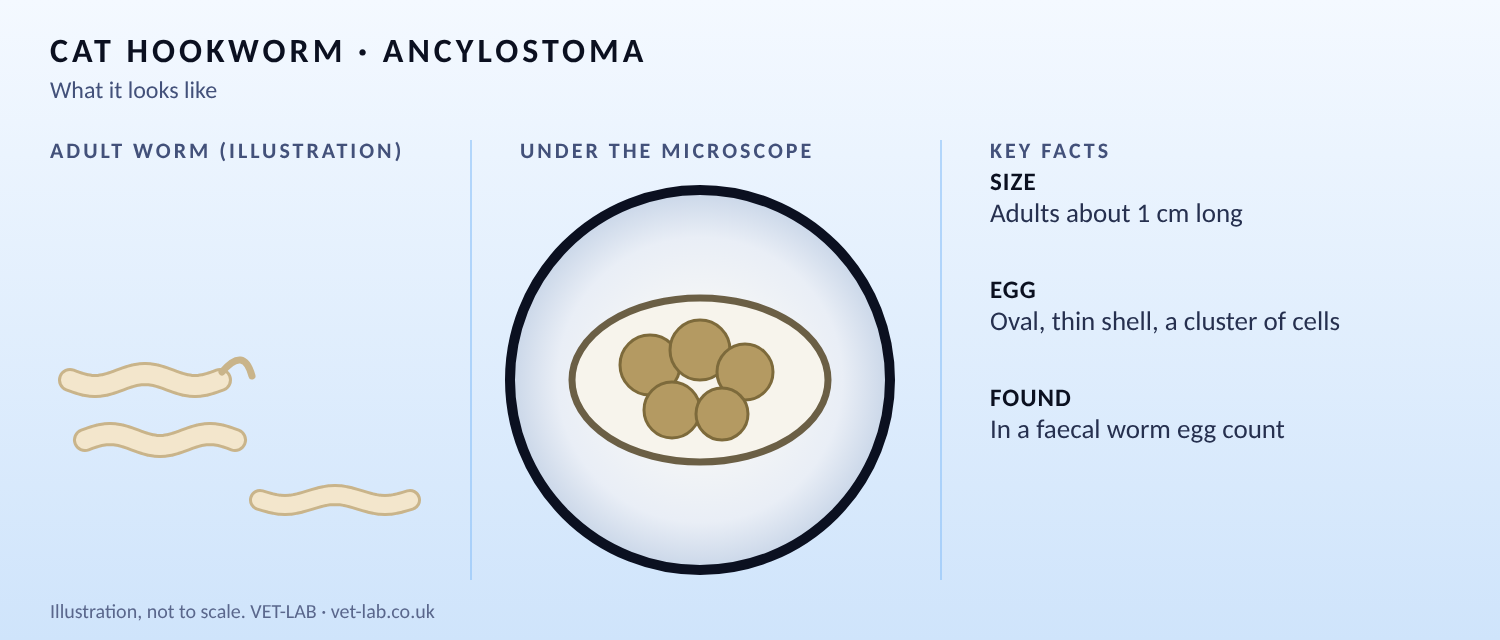
Hookworm eggs are small and oval and can be seen in a faecal worm egg count. Our standard cat worm count looks for roundworm, hookworm and tapeworm eggs from a single sample. Read our results guide to see how to interpret your report.
Ready to test?
Collect a sample at home, post it free to our laboratory (Monday to Wednesday) and your result appears in your account within 24 to 48 hours of the lab receiving your sample.
Order a cat test kitMore cat guides
This page is general information, not veterinary advice. If your cat is unwell, or you are unsure what to do, speak to your vet.