
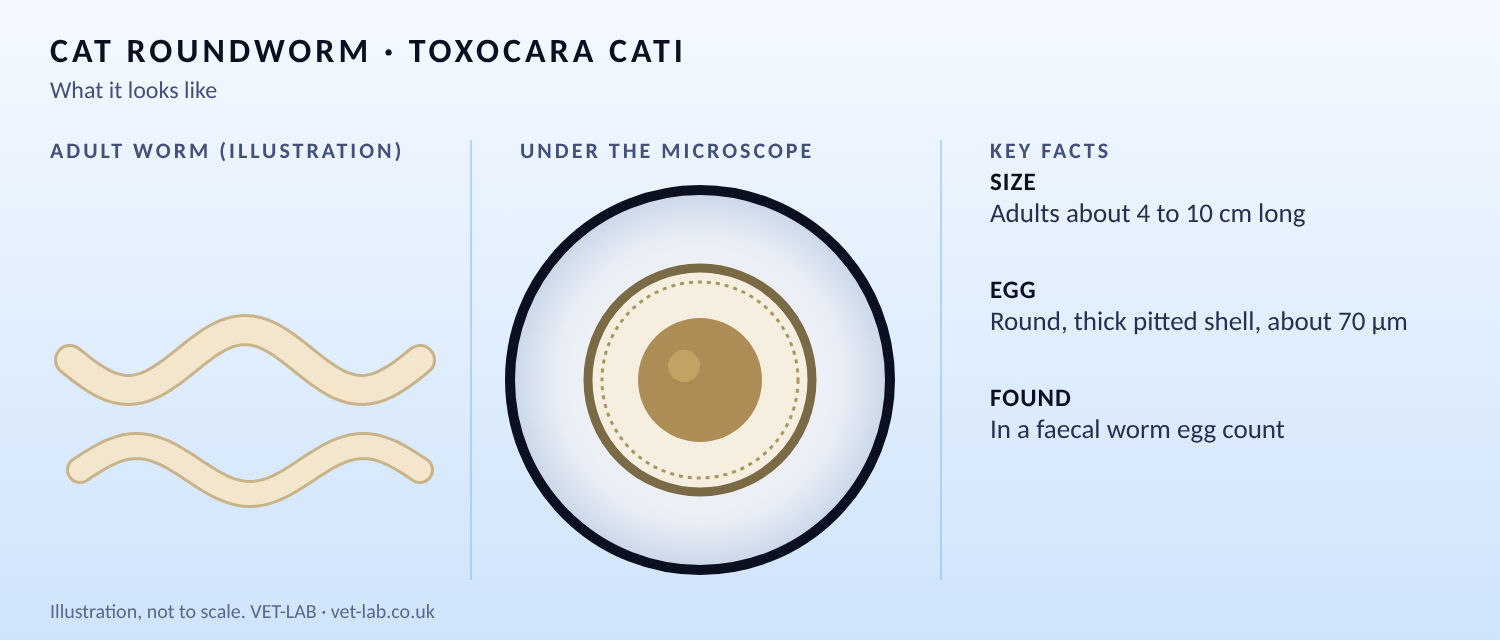
Roundworms are the most common intestinal worms in cats. Two species affect cats: Toxocara cati and Toxascaris leonina. They are long, pale, spaghetti-like worms that live in the gut and feed on its contents.
How do cats get roundworm?
- Kittens can be infected through their mother's milk, so even a well-cared-for litter may carry roundworm.
- Cats of any age can be infected by swallowing eggs from contaminated soil or litter, or by eating a small animal such as a mouse or bird that carries larvae.
Eggs passed in faeces take a few weeks to become infective, and can then survive in the environment for a long time.
What are the signs of roundworm?
- A pot-bellied appearance, especially in kittens
- Poor growth or weight loss
- A dull coat
- Vomiting or diarrhoea
- Worms seen in vomit or faeces
Adult cats often show no signs at all. If your cat is unwell, speak to your vet.
Roundworm and people
Roundworm eggs can occasionally infect people, particularly young children, if eggs are swallowed. Pick up faeces promptly, scoop litter trays daily and wash your hands after handling cats, litter or soil.
Testing for roundworm
A worm egg count looks for roundworm eggs in a fresh faecal sample. Worms shed eggs on and off, so one clear sample does not completely rule out infection, which is why regular testing works better than a single check. Our results guide explains what your report means.
Ready to test?
Collect a sample at home, post it free to our laboratory (Monday to Wednesday) and your result appears in your account within 24 to 48 hours of the lab receiving your sample.
Order a cat test kitMore cat guides
This page is general information, not veterinary advice. If your cat is unwell, or you are unsure what to do, speak to your vet.