
Most cats pick up worms at some point in their lives. Kittens are the most likely to be affected, but adult cats, especially those that hunt, can be infected too. Many cats show no signs at all, which is why testing a sample is the only reliable way to know what is going on.
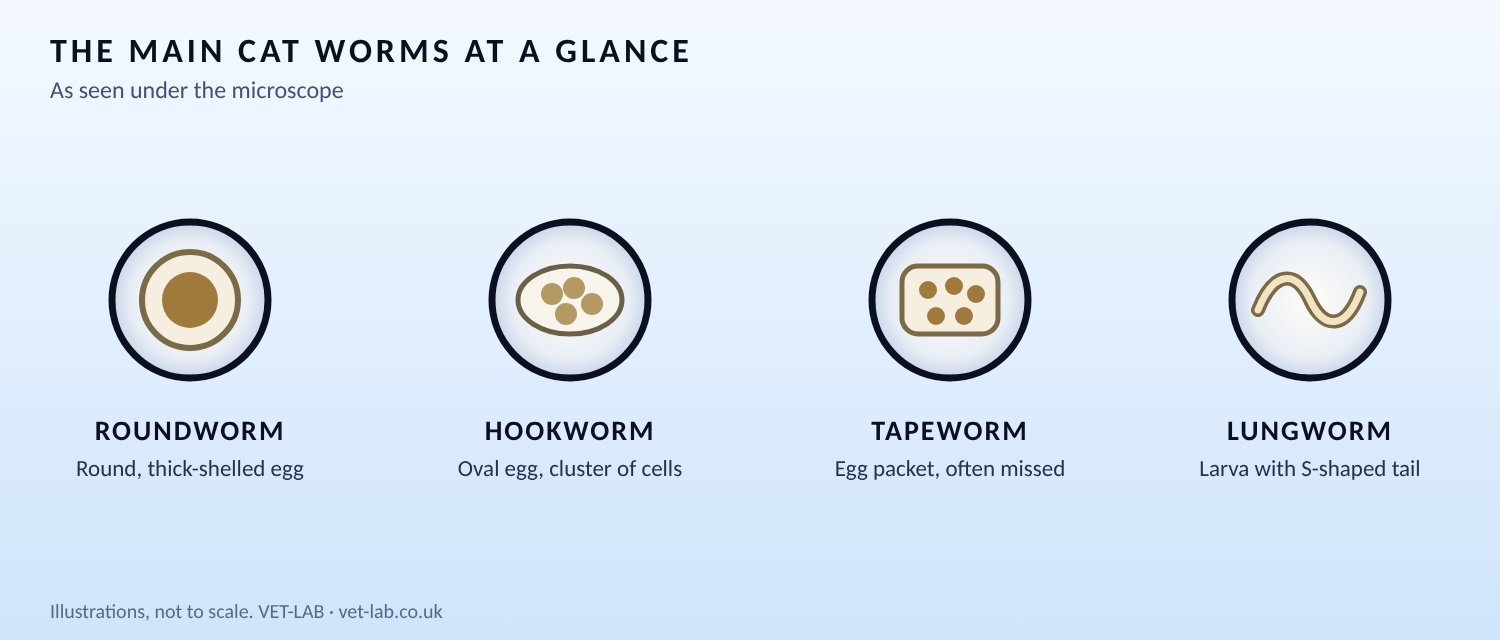
Which worms affect cats?
In the UK the worms vets see most often in cats are:
- Roundworm: the most common worm in cats, especially kittens.
- Hookworm: less common in UK cats, but can cause anaemia when numbers are high.
- Whipworm: rare in cats and uncommon in the UK, but well known in dogs, so owners often ask about it.
- Tapeworm: picked up from fleas or from catching and eating prey.
- Lungworm: not an intestinal worm. It affects cats that hunt, and can cause coughing and breathing problems.
How do cats catch worms?
- From their mother. Kittens can be infected through their mother's milk.
- From the environment. Worm eggs and larvae are passed in faeces and can survive in soil, gardens and litter.
- From prey. Mice, birds, frogs and other small animals can carry larvae that infect the cat that eats them.
- From fleas. A cat that swallows an infected flea while grooming can pick up tapeworm.
How do I know if my cat has worms?
Possible signs include weight loss despite a good appetite, a pot-bellied look (especially in kittens), a dull coat, vomiting, diarrhoea, a cough or laboured breathing, and rice-like segments around the bottom or on bedding. Many infected cats look perfectly well, so do not wait for signs to appear.
What should I do if I think my cat has worms?
A faecal worm egg count checks a fresh sample under the microscope for the eggs and larvae of worms. It tells you whether your cat needs treatment, so you only worm when there is a reason to. See our guide to cat worm count results, and read about worming your cat and cat care and parasite prevention.
Ready to test?
Collect a sample at home, post it free to our laboratory (Monday to Wednesday) and your result appears in your account within 24 to 48 hours of the lab receiving your sample.
Order a cat test kitMore cat guides
This page is general information, not veterinary advice. If your cat is unwell, or you are unsure what to do, speak to your vet.